Coming soon!
Coherence Breathing: Science for Nervous-System Harmony
Coherence breathing is a slow, stable breathing rhythm (≈5–6 breaths/min) that creates measurable improvements in autonomic regulation, HRV, emotional stability and cognitive clarity. Unlike general “relaxation”, it produces physiological coherence — a state where the heart, brain and nervous system operate in synchrony.
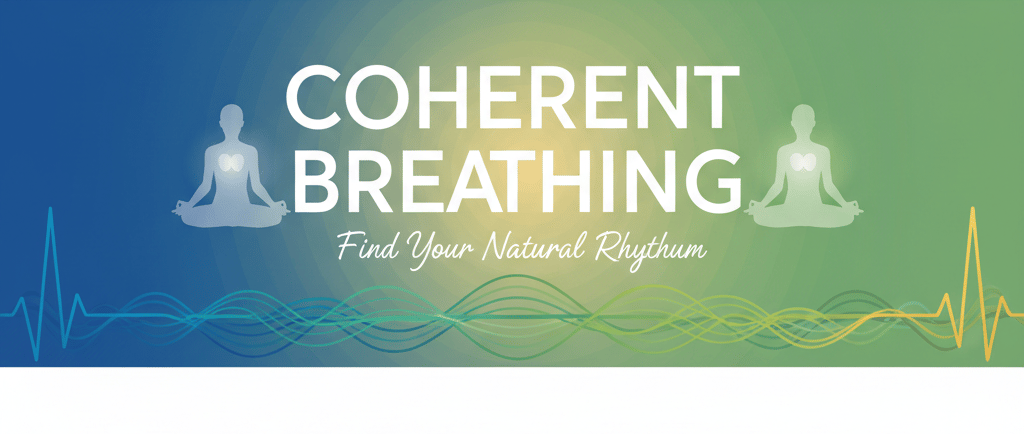
Modern life keeps the nervous system in a semi-permanent “braced” mode — always anticipating, scanning, thinking ahead. Coherence breathing is a research-based way of breathing at a slow and stable rhythm (about 5–6 breaths per minute) that brings the heart, brain, and nervous system back into synchrony.
Unlike typical “deep breathing” meant for relaxation, coherence breathing is about physiological regulation — shifting the body into a state where it naturally functions with more clarity, steadiness and resilience.
The Science in Plain Language
When breathing slows and becomes rhythmic, the vagus nerve is gently stimulated. The vagus is the body’s main “safety signaling” pathway. Once triggered, it tells every major system:
“We are not in threat. Recalibrate.”
As a result, the heart rhythm stabilizes, cortisol reduces, and the brain downshifts from hyper-vigilance into balance. This wave then reflects in mood, cognition, and sleep.
What Changes When You Do It Regularly
People who integrate this breath rhythm daily often report:
Reduced anxiety and emotional swings — less hijack, more response
Improved HRV and stress recovery — the nervous system bounces back faster
Deeper, more stable sleep — not just duration, but quality
Sharper focus and decision clarity — especially under pressure
A felt sense of inner safety — a quieter body without dulling awareness
It is not sedation. It is returning to your baseline human wiring.
Why This Matters Now
Most of us try to solve stress at the level of thoughts — overthinking, reframing, journaling, forcing mindset shifts — while the body underneath is still broadcasting “unsafe.” No cognitive method can fully land while physiology is in defense.
Coherence breathing addresses stress at the root layer — the body’s alarm system — not the surface layer of thoughts.
Minimalism That Scales
What makes coherence breathing powerful is not complexity or intensity, but consistency. Just like you don’t have to believe in gravity for it to work, you don’t have to feel calm during the session for benefits to accrue. The shift is physiological, not psychological.
In a world addicted to more — more tools, more apps, more hacks — coherence breathing is the rare practice that is both minimalistic and measurably effective.
CONTACT US
SUPPORT
connect@vyomaawellness.com
Vaibhav Eastern Grooves, 21st floor, kannamwar nagar, Gajanan chowk, Vikhroli East, Mumbai, Maharashtra
+91 8820245460
Copyright © 2025 VYOMAA Wellness All rights reserved.
ABOUT
FOLLOW US